IT

Top Cyber Threats Facing Law Enforcement Agencies

(And What CJIS-Compliant Organizations Must Do About Them)

Cyber threats targeting law enforcement agencies continue to increase in both scale and sophistication, driven by ransomware evolution, credential theft, and nation-state activity.

Recent federal cybersecurity advisories confirm that ransomware actors are actively exploiting vulnerabilities across organizations worldwide, including government systems.

For organizations responsible for CJIS compliance in Florida, these threats directly impact:

  • CJIS audit outcomes
  • Operational continuity
  • Access to critical systems like NCIC and FCIC

Why Law Enforcement Remains a High-Value Target

Law enforcement environments include:

  • Always-on systems (CAD, RMS, dispatch)
  • Sensitive criminal justice data (CJI)
  • Federally connected systems (CJIS, NCIC, fusion centers)

Attackers target these systems because disruption and data exposure have immediate operational consequences.

Recent federal enforcement actions highlight that ransomware groups continue targeting critical infrastructure and government systems, posing ongoing risks to public safety.


Top Cyber Threats Facing Law Enforcement Agencies

1. Ransomware Attacks and Extortion

Ransomware remains the most critical threat to CJIS-regulated environments.

  • Modern ransomware includes data theft + encryption (double extortion)
  • Threat actors exploit unpatched systems and weak credentials
  • Attacks target public safety and government infrastructure

Federal advisories show ransomware campaigns impacting organizations across 70+ countries using known vulnerabilities.

Real-world example:
The U.S. Department of Justice coordinated a global disruption of the BlackSuit (Royal) ransomware group, which had targeted critical infrastructure and generated millions in illicit proceeds.

CJIS Impact:

  • System encryption and downtime
  • Data exfiltration
  • Immediate compliance violations

2. Credential Theft and Identity-Based Attacks

Credential-based attacks are now a primary intrusion method.

Attackers use:

  • Phishing and spear phishing
  • Infostealer malware
  • Credential replay and MFA bypass

These techniques allow attackers to operate using valid credentials, making detection more difficult.

CJIS Impact:

  • Unauthorized CJIS access
  • Violations of access control requirements
  • Increased audit risk

3. Malware-as-a-Service and Infostealers

Cybercrime has become highly scalable.

  • Malware platforms enable repeated attacks across many victims
  • Infostealers harvest credentials silently
  • Attack infrastructure is reused across campaigns

Law enforcement operations have disrupted malware ecosystems, but reports show these networks quickly re-form after takedowns.

CJIS Impact:

  • Silent data exfiltration
  • Long dwell times before detection
  • Compromised CJIS-connected endpoints

4. Supply Chain and Vendor Risk

Third-party vendors remain a critical vulnerability.

Law enforcement depends on:

  • CAD/RMS vendors
  • Cloud platforms
  • Managed service providers

Recent enforcement actions demonstrate how ransomware groups target critical infrastructure sectors through interconnected systems.

CJIS Compliance Note:
Agencies are still responsible under the CJIS Security Addendum, even when a vendor is compromised.

CJIS Impact:

  • Vendor breach = agency liability
  • Increased audit scrutiny
  • Potential non-compliance findings

5. AI-Accelerated Cyberattacks

Attackers are increasingly leveraging automation and advanced tooling.

Federal cybersecurity efforts emphasize the need for continuous monitoring and rapid detection as threats evolve.

This shift increases:

  • Attack speed
  • Volume of phishing and malware campaigns
  • Difficulty of detection

CJIS Impact:

  • Faster compromise timelines
  • Greater reliance on real-time monitoring
  • Increased risk of undetected breaches

6. Operational Disruption and System Downtime

Cyberattacks are increasingly focused on availability and disruption.

Targets include:

  • Dispatch systems
  • Records management systems
  • Law enforcement IT infrastructure
  • Email Systems

Ransomware campaigns are specifically designed to halt operations and force rapid response decisions.

CJIS Impact:

  • Violations of availability requirements
  • Public safety consequences
  • Immediate compliance exposure

The CJIS Compliance Connection

Each of these threats directly maps to CJIS Security Policy requirements:

CJIS mandates:

  • Continuous monitoring and logging
  • Incident response capability
  • Strong authentication and access control
  • Vendor risk management

Organizations pursuing CJIS compliance in Florida must implement these controls or risk:

  • CJIS audit failures
  • Loss of CJIS system access
  • Legal and operational consequences

Why a CJIS MSSP is Critical

A CJIS MSSP (Managed Security Services Provider) helps agencies:

  • Monitor systems 24/7
  • Detect and respond to threats quickly
  • Maintain continuous CJIS compliance

This is especially critical for agencies without dedicated internal security teams.


How Rolle IT Cybersecurity Supports CJIS Compliance

Rolle IT Cybersecurity is a trusted CJIS MSSP supporting agencies and contractors across Florida. Contact Rolle IT Cybersecurity for more information Info@rolleit.com 321-872-7576

Core Services:

  • 24/7 SOC monitoring and threat detection
  • CJIS-compliant incident response planning
  • Endpoint protection (CrowdStrike-powered)
  • Vulnerability management and hardening
  • CJIS audit help and remediation

Outcomes:

  • Maintain uninterrupted CJIS access
  • Reduce risk of cyber incidents
  • Pass CJIS audits with confidence
  • Strengthen operational resilience

Final Takeaway

The most significant cyber threats facing law enforcement today include:

  • Ransomware and extortion attacks
  • Credential theft and identity compromise
  • Malware and infostealer ecosystems
  • Supply chain vulnerabilities
  • Rapidly evolving attack methods

For organizations handling CJI, cybersecurity is inseparable from compliance.

Agencies that adopt proactive, CJIS-aligned cybersecurity strategies especially with a qualified CJIS MSSP are best positioned to:

  • Protect sensitive data
  • Maintain operations
  • Achieve CJIS compliance in Florida

FAQ

What is CJIS compliance in Florida?

CJIS compliance in Florida means adhering to the FBI CJIS Security Policy as enforced by FDLE, including requirements for access control, encryption, incident response, and auditing.


What are the biggest cybersecurity threats to law enforcement?

The top threats include ransomware, credential theft, phishing, malware infections, and supply chain attacks targeting sensitive law enforcement systems.


What is a CJIS MSSP?

A CJIS MSSP is a managed security provider that delivers monitoring, detection, and incident response services aligned with CJIS requirements.


What happens if you fail a CJIS audit?

Failure can result in corrective actions, increased oversight, or loss of access to CJIS systems such as NCIC or FCIC.


How can agencies prepare for a CJIS audit?

Preparation includes implementing monitoring, incident response plans, access controls, documentation, and working with a CJIS MSSP. Contact Rolle IT Cybersecurity for more information Info@rolleit.com 321-872-7576


Why is incident response critical for CJIS compliance?

Incident response ensures agencies can detect, contain, and report breaches involving CJI, which is a core CJIS requirement.


Sources

Top Cyber Threats Facing Law Enforcement Agencies Read More »

A Strategic Microsoft Partner for GCC High Environments

For organizations already operating under Microsoft 365 GCC High (GCCH) requirements, the primary challenge is not determining whether GCCH is needed, but ensuring it is implemented, governed, and sustained correctly.

Rolle IT supports executive leadership and procurement stakeholders by providing structured oversight and long-term partnership for GCC High environments, reducing operational risk and ensuring contractual obligations are met.


Executive and Procurement Priorities

Organizations required to operate in GCC High face several non-negotiable priorities:

  • Proper eligibility validation and license issuance
  • Secure, defensible tenant configuration
  • Alignment with contractual and regulatory obligations
  • Audit readiness and documentation support
  • Long-term operational sustainability

Rolle IT works with leadership teams to ensure these priorities are addressed consistently and deliberately, without introducing unnecessary complexity or risk.


Rolle IT’s Role as Your GCC High Partner

Rolle IT acts as a governance-focused Microsoft partner, supporting GCC High environments throughout their lifecycle.

Our role includes:

  • Eligibility and Licensing Assurance
    Supporting accurate qualification, documentation, and license procurement through authorized channels.
  • Tenant Architecture and Governance Advisory
    Advising on administrative structure, identity strategy, and access models aligned with security and compliance expectations.
  • Security and Compliance Alignment
    Ensuring GCC High configurations support requirements such as NIST SP 800-171, DFARS, ITAR, and CJIS, where applicable.
  • Operational Readiness and Continuity
    Supporting adoption, change management, and long-term sustainability within the GCC High environment.

This approach enables leadership to make defensible, well-informed decisions.


Designed for Oversight and Accountability

GCC High environments must withstand scrutiny—from auditors, assessors, and contracting authorities.

Rolle IT emphasizes:

  • Clear governance models
  • Documented configuration decisions
  • Repeatable security practices
  • Reduced reliance on ad-hoc or reactive changes

This structure supports accountability and reduces long-term risk.


Engagement Beyond Initial Implementation

GCC High is not a one-time project. Licensing changes, new users, evolving contracts, and assessments introduce ongoing demands.

Rolle IT remains engaged to support:

  • Licensing lifecycle management
  • Configuration and governance reviews
  • Audit and assessment preparation
  • Strategic guidance as requirements evolve

Our clients value continuity and institutional knowledge, not one-time delivery.


A Partner for Leadership and Procurement Teams

Rolle IT complements internal IT organizations by providing specialized expertise and advisory support where it matters most. We help leadership and procurement teams move forward with confidence, clarity, and documented assurance.


Partner with Rolle IT

For organizations already committed to GCC High, selecting the right Microsoft partner is a critical governance decision.

Rolle IT provides the oversight, experience, and continuity required to operate GCC High environments with confidence and control.

Info@rolleit.com 321-872-7576

A Strategic Microsoft Partner for GCC High Environments Read More »

DoD’s 48 CFR Final Rule Reaches OIRA Review & is Cleared

On July 22, 2025, the Department of Defense took a major step toward finalizing its long-anticipated 48 CFR (DFARS) rule implementing the Cybersecurity Maturity Model Certification (CMMC). The rule was officially submitted to the Office of Information and Regulatory Affairs (OIRA) for interagency review.

This submission marks the last checkpoint before the rule is published in the Federal Register and becomes binding on contractors. Once cleared by OIRA, DoD can move forward with inserting the updated DFARS requirements into new solicitations and contracts.

What Comes Next

  • OIRA Review: OIRA cleared it on August 25, 2025. 
  • Federal Register Publication: The rule will be published in the Federal Register along with an official effective date. Federal regulations generally become enforceable within 1 to 60 days of publication.
  • Contract Implementation: Contractors can expect DFARS clauses referencing the CMMC requirements to begin appearing in solicitations as early as late 2025.

Why It Matters

This milestone carries real implications for defense contractors. Once the rule takes effect, companies that lack a CMMC-certified environment may find themselves ineligible to win or execute DoD contracts. It won’t be enough to have plans in place—contracting officers will need assurance that sensitive Department of Defense work is performed within a secure, certified environment.

For many small and mid-sized businesses, this could mean the difference between maintaining a foothold in the Defense Industrial Base or being locked out of future opportunities. Companies that have delayed compliance run the risk of being passed over in favor of competitors who are audit-ready.

Final Thought

For defense contractors, this is the clearest signal yet that CMMC compliance is no longer optional or “someday.” With the rule in OIRA’s hands, the countdown to enforcement has begun. Contractors handling Controlled Unclassified Information (CUI) should ensure their NIST 800-171 controls are implemented, documented, and verifiable inside a certified environment.

DoD’s 48 CFR Final Rule Reaches OIRA Review & is Cleared Read More »

Supercharge Your Business with AI: Integrate Co-Pilot Seamlessly

Unlock the Power of AI-Driven Productivity

At Rolle IT, we specialize in transformations and streamlining IT processes. Integrating Microsoft Co-Pilot into your existing business systems is one of the biggest upgrades to user experience a company can make — helping you transform daily operations with intelligent, real-time assistance. Whether you’re using Microsoft 365, Dynamics, Teams, or custom enterprise platforms, our tailored solutions ensure Co-Pilot becomes an integral part of your workflows.

Why Integrate Co-Pilot?

  • Boost Efficiency: Automate repetitive tasks, generate documents, and summarize conversations instantly.
  • Make Smarter Decisions: Co-Pilot turns your data into actionable insights with natural language queries and visual reports.
  • Enhance Collaboration: Empower your teams with AI-enhanced communication and content creation tools.
  • Streamline Workflows: Integrate Co-Pilot with ERP, CRM, HR, or other line-of-business systems for seamless automation.

A Game-Changer for Small Businesses

Running lean doesn’t mean running slow. For small businesses, Co-Pilot is like hiring a team of virtual employees—without the overhead. From drafting emails and proposals to analyzing sales reports and managing calendars, Co-Pilot enables your team to do more with less, maximizing productivity and accelerating growth. It’s not just software—it’s a scalable digital teammate that grows with your business.

What We Offer

  • Custom Integration Services: We connect Co-Pilot to your unique systems, whether cloud-based, hybrid, or on-prem.
  • Security & Compliance: Ensure AI access respects your data governance and industry standards.
  • Training & Support: We guide your team on how to get the most out of Co-Pilot with tailored onboarding and support.

Who Is This For?

From startups and small enterprises to Fortune 500 companies, any organization looking to scale, innovate, and reduce manual workloads can benefit. Whether you’re in finance, healthcare, logistics, or legal, our solutions are industry-adapted and enterprise-ready.


Let AI Work With You.

📩 Schedule a demo today and discover how Co-Pilot can revolutionize your workplace. Your next level of productivity starts here.

Supercharge Your Business with AI: Integrate Co-Pilot Seamlessly Read More »

Rolle IT March 2025

We’re proud to have been represented at FIVE incredible events this March, connecting with industry leaders, sharing our expertise, and staying at the forefront of cybersecurity, compliance, and managed services.

📍 From regional summits to national conferences, Rolle IT showed up, shared insights, and strengthened relationships with partners and clients alike.

💬 Whether it was discussing the future of MSSPs, diving into CMMC compliance strategies, supporting our local community, or showcasing our proactive approach to IT and cybersecurity—March proved why Rolle IT continues to be a trusted voice in the industry.

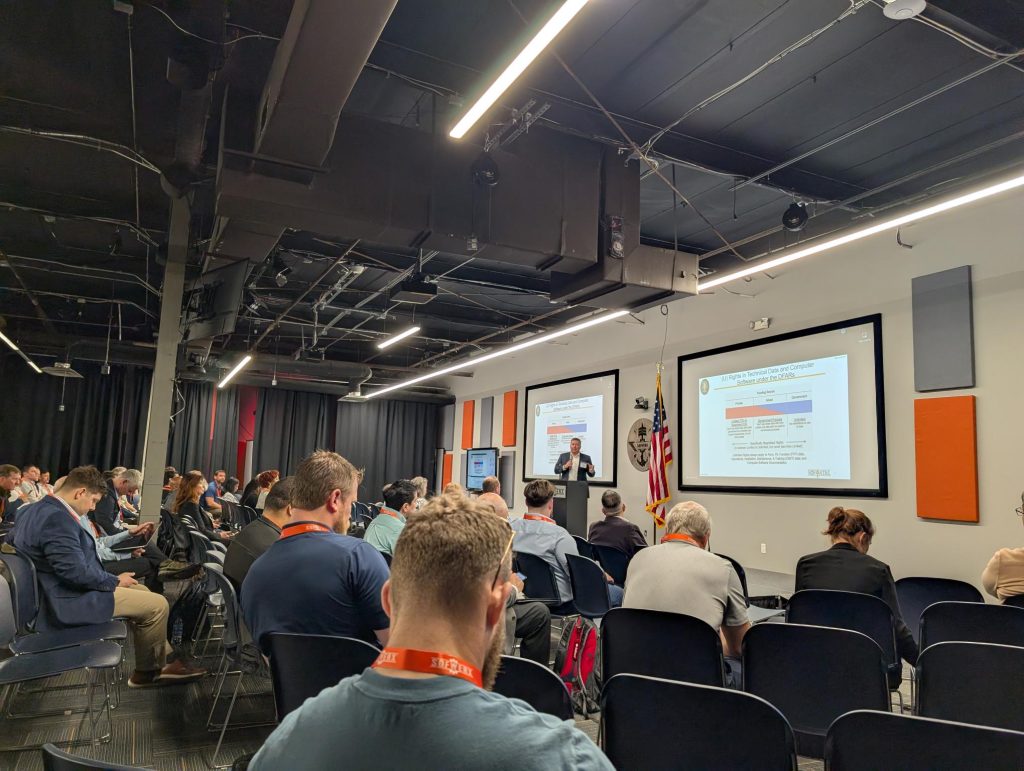
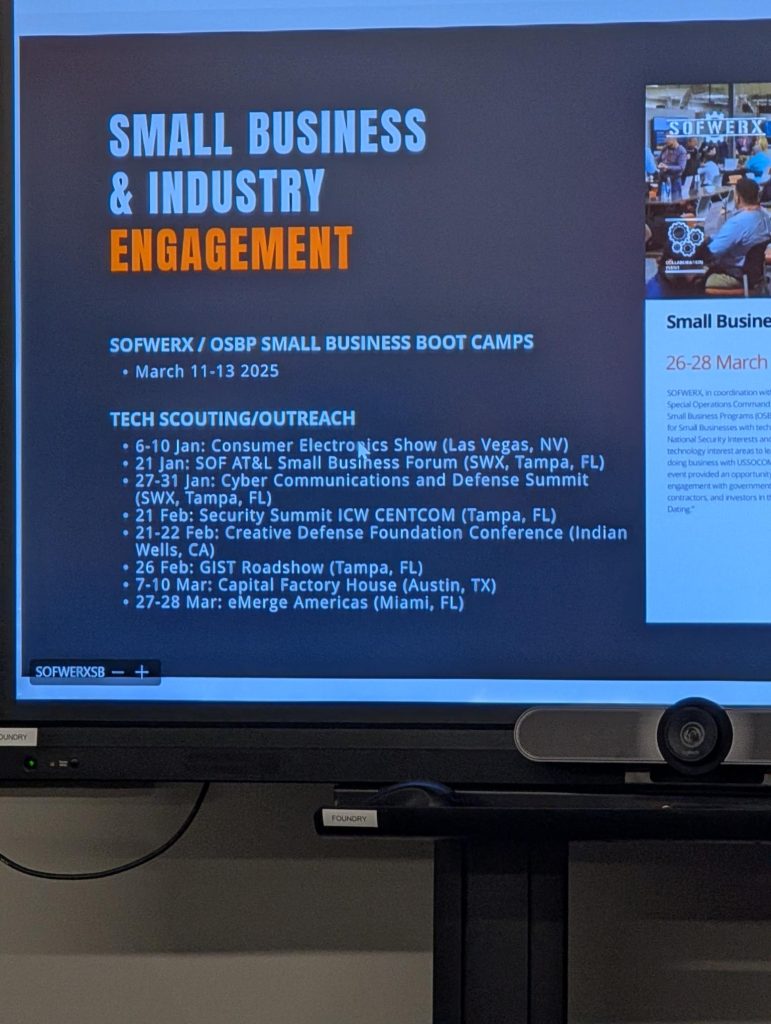
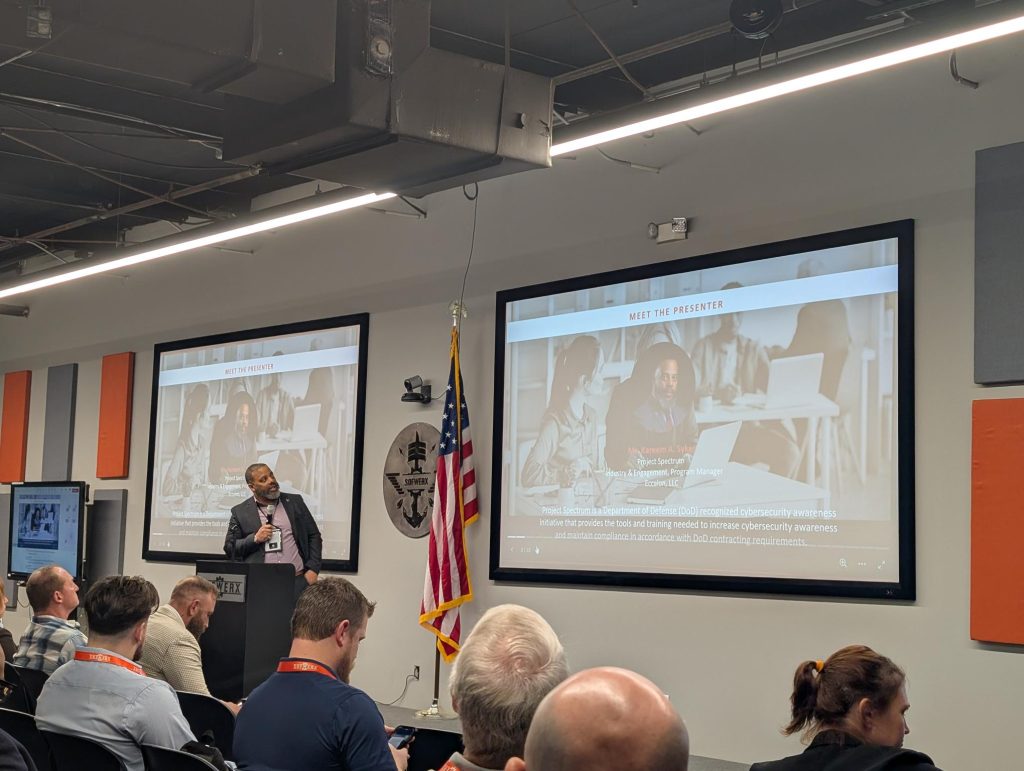
+Rolle IT attended SOFWERX Small Business Bootcamp An energizing few days of collaboration, innovation, and insight—connecting with government leaders, tech experts, and fellow small businesses all driving mission-focused solutions. Great CMMC Presentation and Questions and Answers from the audience by Project Spectrum.

+Celebrating WeVENTURE’s Women Who Rock Awards as a sponsor. It was an energizing and engaging luncheon shining a spotlight on local women who are accomplishing remarkable feats and leading through their actions. 

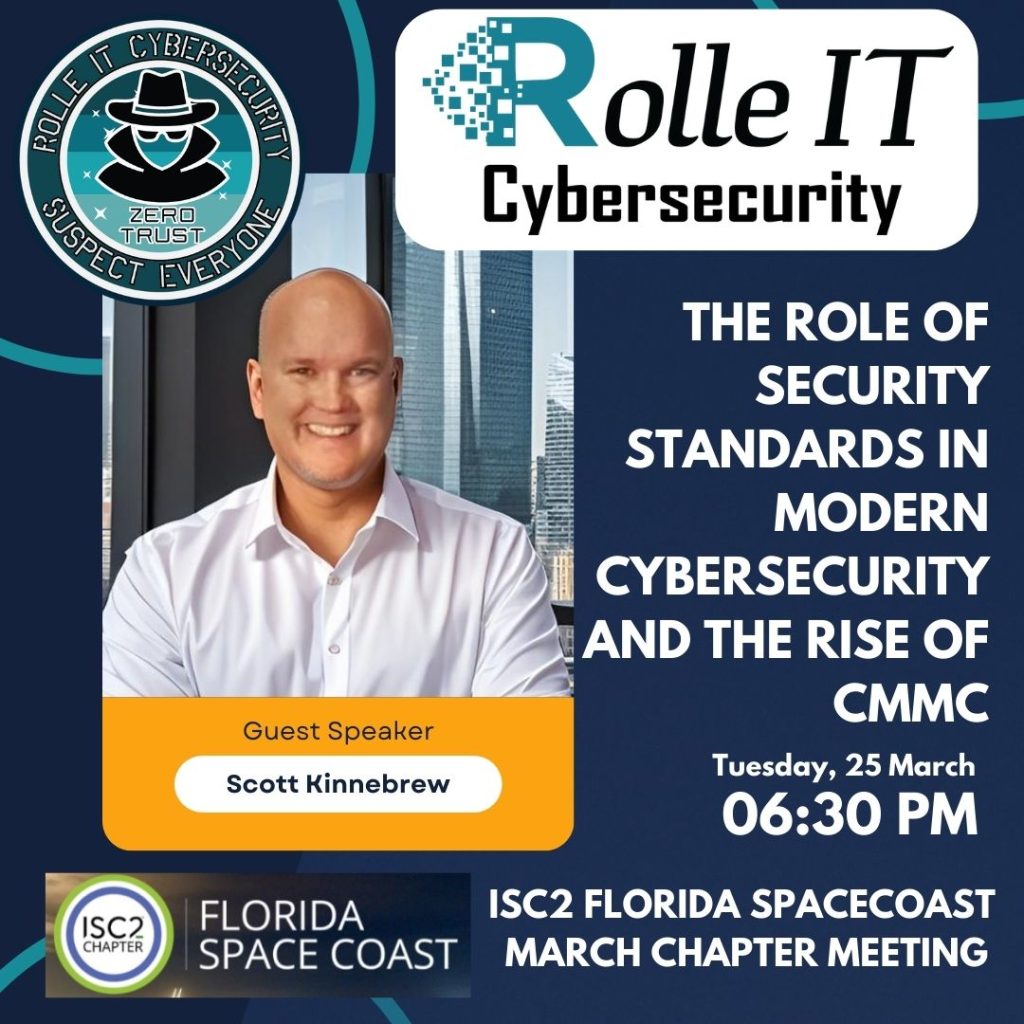
+Director of Security Scott Kinnebrew was the featured speaker at ISC2 Florida Space Coast March Meeting, focusing on CMMC and the Role of Security Standards in Modern Cybersecurity.

+Ashleigh Caswell, VP of Commercial Services is also Secretary for AFCEA Space Coast Chapter that hosted an insightful event at The Tides, Patrick SFB, featuring COL Shannon DaSilva, STARCOM, whose expertise, engaging presence, and strategic perspective provided invaluable takeaways for industry and government partners. Her ability to convey complex challenges while fostering open dialogue highlighted her reputation as a visionary leader in space operations.

+CEO Cordell Rolle was a member of a very distinguished CEO panel Navigating Government Contracting at The Vertex Expo at FIT organized by , WeVenture alongside Alluvionic CEO Wendy Romeu and 8Koi CEO Inga Young, they shared their government contracting journey and success in scaling.

🙌 Huge thanks to the organizers, attendees, and everyone who made these events a success.

Onward and upward—see you at the next one!

#RolleIT #Cybersecurity #MSSP #CMMC #ITLeadership #ComplianceExperts #ITSecurity #DevSecOPs #spacecoast #DIB

Rolle IT March 2025 Read More »

What is Malvertising?

Malvertising, short for malicious advertising, refers to the practice of using online ads to spread malware. Cybercriminals embed malware within seemingly harmless ads, which are then displayed on legitimate websites. When users click on these ads, they unwittingly download malware onto their devices, putting their personal information and sensitive data at risk. Bad actors are pairing these efforts with SEO Poisoning to falsely promote malicious websites to higher ranks in search engine results. SEO poisoning relies on users believing the results closest to the top of a search result are the most credible.

“Throughout 2023, adversaries such as LUNAR SPIDER regularly abused Google advertisements to ensure their malicious ads appeared at the top of search result pages. Threat actors such as SolarMarker operators regularly used SEO poisoning throughout 2023.” – Crowdstrike Annual Threat Report

The Dangers of Malvertising

Malvertising poses a significant threat to businesses of all sizes.

  1. Data Breaches: Malvertising can lead to data breaches, exposing sensitive information such as customer data, financial records, and intellectual property.
  1. Financial Losses: A successful malvertising attack can result in financial losses due to theft, ransom demands, or damage to business operations.
  2. Reputation Damage: A data breach caused by malvertising can tarnish a company’s reputation and erode customer trust, leading to a loss of business and credibility.

Rolle IT Protects clients from Malvertising threats.

  1. Ad Filtering: Ad filtering services block malicious ads from being displayed on your website or network.
  2. Timely Software Updates: Ensuring that all software, including web browsers, plugins, and security software, is regularly updated with the latest patches and security fixes.
  3. Employee Training : Train employees to recognize the signs of malvertising and avoid clicking on suspicious ads or links.
  4. Establish Secure Connections: Encourage employees to use secure connections, such as virtual private networks (VPNs), when accessing the internet, especially on public Wi-Fi networks.
  5. Monitor Network Traffic: Monitor network traffic for signs of unusual activity or unauthorized access, which may indicate a malvertising attack in progress.
  6. Endpoint Protection: Install and maintain endpoint protection solutions, such as antivirus software and intrusion detection systems, to detect and block malware infections.

Malvertising is a pervasive threat that can have serious consequences for businesses. By taking proactive measures to protect against malvertising, businesses can safeguard their data, finances, and reputation from harm. By staying vigilant and implementing robust security measures, businesses can minimize the risk of falling victim to malvertising attacks.

What is Malvertising? Read More »

Rolle IT Receives Innovation of Valor Award

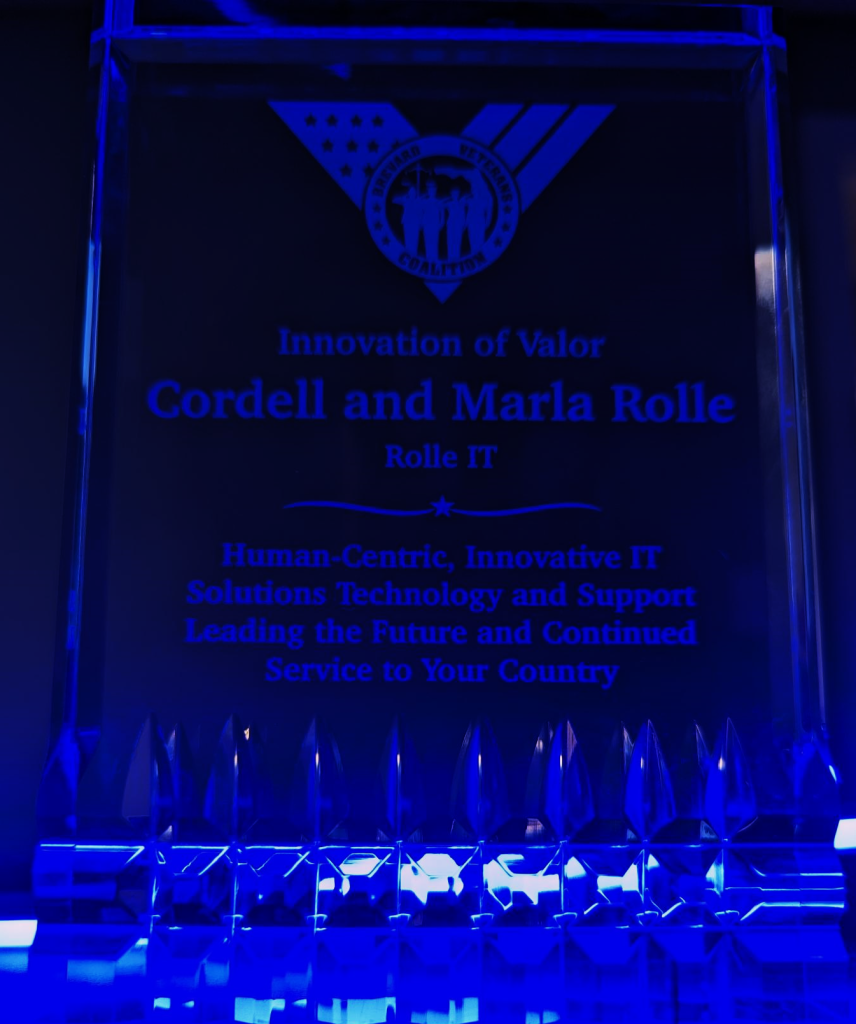
Rolle IT is grateful and honored to receive the Innovation of Valor award from the Brevard Veterans Coalition! Rolle IT is proud to be home to many Veterans, military families, and patriots.

Thank you to the Brevard Veterans Coalition for their dedication to serving the Veterans of Brevard County and their families through mentorship, assistance, and community-building. Learn more at https://lnkd.in/eFUKYkcf

#valor#innovation#Brevard#veteran#Spacecoast#Techfirm#award

Rolle IT Receives Innovation of Valor Award Read More »

What is Tier 3 Response Capabilities, and why do you need it?

Tier 3 Helpdesk response involves addressing the most complex and challenging technical issues, requiring advanced expertise, collaboration, and problem-solving skills. Tier three technicians play a critical role in maintaining the functionality and stability of an organization’s IT systems and infrastructure.

As a Managed Services provider, Rolle IT has the in-house ability to respond quickly and seamlessly to escalations needing expert response.

Tier 3 Helpdesk response refers to a specialized level of technical support that deals with complex and escalated issues that cannot be resolved by lower-tier support teams. In a typical IT support structure, helpdesk support is organized into multiple tiers, with each tier handling different levels of technical difficulty.

Tier 3 Helpdesk response involves addressing advanced technical problems that require in-depth expertise, specialized knowledge, and often collaboration with other departments or teams. Here’s what you can expect from a Tier 3 Helpdesk response:

  1. Complex Issue Resolution: Tier 3 technicians handle issues that are more intricate and challenging to resolve. These problems usually involve in-depth troubleshooting, research, and analysis. They might pertain to intricate software or hardware configurations, network architecture, security breaches, system integrations, and other advanced technical areas.
  2. Expert Knowledge: Tier 3 technicians are subject matter experts with a deep understanding of the products, systems, and technologies they support. They possess advanced knowledge and are proficient in the technical intricacies of the organization’s infrastructure.
  3. Escalation Point: When an issue cannot be resolved by Tier 1 or Tier 2 support teams, it is escalated to Tier 3. Tier 3 technicians are the highest level of support within the helpdesk structure and are responsible for tackling the most challenging cases.
  4. Collaboration and Coordination: Resolving complex issues often requires collaboration with other departments, such as development, engineering, or network operations. Tier 3 technicians may need to coordinate efforts to diagnose and resolve issues that span different areas of expertise.
  5. Root Cause Analysis: Tier 3 technicians focus not only on resolving immediate issues but also on identifying the root causes behind recurring or complex problems. This involves a thorough investigation to prevent similar issues from arising in the future.
  6. Documentation: Detailed documentation is crucial in Tier 3 support. Technicians document the steps taken to diagnose and resolve issues, which helps create a knowledge base for future reference and training purposes.
  7. Customer Communication: Tier 3 technicians often interact directly with customers or end-users to provide updates, explanations, and solutions. Effective communication skills are essential in managing user expectations and conveying complex technical information in a clear manner.
  8. Continuous Improvement: Tier 3 support plays a role in improving the overall support process. By identifying patterns in escalated issues and proposing solutions to streamline support workflows, they contribute to enhancing the efficiency and effectiveness of the helpdesk.

Rolle IT, as DevSecOps IT firm, has in house Tier 3 support, ready for all of our clients should the need arise.

Call or email for more information on how the team at Rolle IT can support your organization. CMMC@rolleit.com, 321-872-7576

What is Tier 3 Response Capabilities, and why do you need it? Read More »