AI

What Is a Compliance Assessment (and Why XDR and Vulnerability Scans Aren’t Enough)?

What Is a Compliance Assessment?

A compliance assessment is a structured evaluation of whether your systems, configurations, and security controls meet defined regulatory or framework requirements such as CMMC or NIST.

Unlike traditional security tools, it does not just identify risks—it verifies whether controls are correctly implemented and functioning as intended.

A compliance assessment validates whether controls are correctly implemented—not just whether tools are present.


Why This Matters More Than Ever

Many organizations believe they are compliant because they have invested in modern security tools like XDR and vulnerability scanners.

But compliance is not about tool deployment.
It is about control effectiveness, configuration accuracy, and documented evidence.

This is where the gap exists—and where most audit failures occur.


What XDR Does (and Doesn’t Do)

Extended Detection and Response (XDR) platforms are critical for modern security operations.

What XDR Does Well:

  • Detects suspicious activity and threats
  • Provides endpoint and identity visibility
  • Enables rapid response to incidents

What XDR Does NOT Do:

  • Validate system configurations against compliance frameworks
  • Confirm that required controls are implemented correctly
  • Provide structured, audit-ready compliance evidence

XDR is designed for detection and response, not compliance validation.


What Vulnerability Scanning Does (and Doesn’t Do)

Vulnerability scanning tools identify known weaknesses across systems and applications.

What Vulnerability Scans Do Well:

  • Identify missing patches and known CVEs
  • Highlight exposed services and outdated software
  • Provide risk-based prioritization of vulnerabilities

What Vulnerability Scans Do NOT Do:

  • Assess whether security policies are correctly configured
  • Validate control implementation across environments
  • Correlate findings with real-world compliance requirements

Vulnerability scans measure exposure, not compliance readiness.


Compliance Assessment vs. Security Tools

CapabilityXDRVulnerability ScanCompliance Assessment
Detect threatsYesNoPartial
Identify vulnerabilitiesNoYesYes
Validate configurationsNoNoYes
Confirm compliance alignmentNoNoYes
Provide audit-ready documentationNoNoYes

This distinction is critical.

Security tools generate signals.
Compliance assessments validate the environment behind those signals.


What a True Compliance Assessment Includes

A real compliance assessment goes beyond scanning and detection. It provides a comprehensive, evidence-based view of your environment.

Key Components:

1. Configuration Validation
Evaluates system settings, policies, and configurations against compliance requirements.

2. Control Implementation Review
Confirms whether required controls are properly deployed and enforced.

3. Cross-System Correlation
Analyzes data from multiple sources—XDR, vulnerability scans, telemetry—to identify gaps.

4. Evidence and Documentation
Produces structured output that supports audits and internal reporting.

5. Actionable Remediation Guidance
Identifies not just what is wrong, but what to fix and how to prioritize it.


Where Organizations Typically Fail

Even well-resourced IT teams encounter the same challenges:

  • Over-reliance on tools instead of validation
  • Misconfigured policies and security settings
  • Configuration drift across environments
  • Lack of centralized visibility across systems
  • Insufficient documentation for audits

The result is a false sense of security—and increased risk of compliance failure.


Introducing ARCH by Rolle IT

ARCH is Rolle IT’s AI-supported compliance assessment platform designed to close the gap between security tools and compliance validation.

It combines:

  • XDR data
  • Vulnerability scan results
  • Security telemetry
  • System and environment configurations

Into a single, real-time assessment model.

What ARCH Delivers:

  • A snapshot of your current environment
  • Identification of hidden gaps and misconfigurations
  • Validation of control implementation
  • Detailed, audit-ready reporting
  • Actionable insights for remediation

ARCH is purpose-built for organizations operating in Microsoft GCC High environments and those pursuing CMMC compliance.


From Assumption to Evidence

If your organization relies solely on XDR and vulnerability scanning, you are only seeing part of the picture.

A compliance assessment provides the missing layer:
validation, alignment, and proof.

ARCH gives you the ability to move from:

  • Tool deployment → Control validation
  • Security signals → Compliance evidence
  • Assumptions → Confidence

Take the Next Step

Before your next audit—or before risk becomes reality—understand where you truly stand.

Learn how ARCH can help your organization validate compliance, identify gaps, and build a defensible security posture.

Contact INFO@Rolleit.com for more information

What Is a Compliance Assessment (and Why XDR and Vulnerability Scans Aren’t Enough)? Read More »

The Misunderstanding Around GCC High

Many organizations assume:

“If we are in GCC High, we are closer to compliance.”

While partially true, this assumption is dangerous.

GCC High provides:

  • A compliant infrastructure baseline

But it does not guarantee:

  • Proper configuration
  • Control implementation
  • Policy enforcement

Compliance still depends on how your environment is configured and managed.


Key Challenges in GCC High Compliance Validation

1. Identity and Access Complexity

Identity is central to CMMC and security frameworks.

In GCC High environments, organizations often struggle with:

  • Conditional access misconfigurations
  • Over-permissioned accounts
  • Inconsistent MFA enforcement
  • Role-based access issues

These gaps are difficult to detect without detailed configuration analysis.


2. Policy and Configuration Misalignment

Security policies must be:

  • Defined
  • Applied
  • Verified

Common issues include:

  • Policies created but not enforced
  • Conflicting configurations across systems
  • Incomplete deployment of required settings

Without validation, these issues remain hidden.


3. Logging and Telemetry Gaps

CMMC requires:

  • Logging
  • Monitoring
  • Traceability

In GCC High, organizations often encounter:

  • Incomplete log coverage
  • Misconfigured retention policies
  • Gaps between systems generating logs and systems storing them

This creates risk in both security operations and compliance validation.


4. Configuration Drift in Cloud Environments

Cloud environments are dynamic by nature.

Over time:

  • Settings change
  • Permissions evolve
  • Policies are modified

This leads to configuration drift, where the environment no longer matches its intended compliant state.

Without regular validation, drift introduces silent compliance gaps.


5. Lack of Unified Visibility

GCC High environments span multiple layers:

  • Microsoft 365 services
  • Identity systems
  • Endpoint configurations
  • Security tools

Most organizations lack a unified way to see:

  • How these systems interact
  • Whether controls are consistently implemented
  • Where gaps exist across the environment

This fragmentation makes validation difficult.


The Core Challenge: Seeing the Whole Environment

Compliance in GCC High is not about individual tools or settings.

It is about:

  • How systems are configured
  • How controls are enforced
  • How data flows across the environment

Without a unified, correlated view, organizations are left with:

  • Partial insights
  • Incomplete validation
  • Increased audit risk

What Effective GCC High Validation Requires

To confidently validate compliance in GCC High, organizations need:

Configuration-Level Visibility

Understanding how systems are actually configured—not just how they should be configured.

Cross-System Correlation

Connecting identity, endpoint, telemetry, and policy data into a cohesive assessment.

Control Mapping

Aligning configurations and findings to frameworks like CMMC.

Evidence Generation

Producing documentation that supports audit requirements.


How Rolle IT ARCH Tool Solves GCC High Validation Challenges

ARCH by Rolle IT was built with GCC High environments in mind.

It provides a structured, real-time assessment that combines:

  • XDR insights
  • Vulnerability data
  • Telemetry
  • System configurations

ARCH Enables Organizations To:

  • Capture a true snapshot of their environment
  • Identify misconfigurations across systems
  • Validate control implementation against compliance standards
  • Detect gaps caused by drift or misalignment
  • Generate actionable, audit-ready reports

ARCH delivers the visibility that GCC High environments require—but most organizations lack.


From Complexity to Clarity

GCC High environments are powerful, but they are not self-validating.

Compliance requires:

  • Insight
  • Validation
  • Documentation

Without these, complexity becomes risk.


Operating in GCC High does not guarantee compliance.

It raises the standard for how compliance must be validated.

If your organization needs a clearer, more defensible view of its environment:

ARCH provides the assessment capability to get there.

Connect with us at CMMC@Rolleit.com

The Misunderstanding Around GCC High Read More »

Its Always DNS

DNS Outages Are a Business Redundancy Wake-Up Call

Recent internet disruptions caused by DNS failures have highlighted something every organization needs to take seriously: even the biggest players in the world can go down without warning. For businesses that rely on cloud tools, communications platforms, remote operations or online services, DNS outages are not just an IT problem. They are a business continuity risk.

Is it DNS?

Recent DNS Related Outages Show the Risks

  • In October 2025, Amazon Web Services experienced a DNS related issue that disrupted major services in its US-EAST-1 region. Businesses that depended on AWS suddenly found key systems unreachable.
  • In July 2025, Cloudflare’s 1.1.1.1 DNS resolver went offline worldwide for almost an hour, preventing millions of users from accessing websites and cloud applications.
  • In November 2025, another DNS related event affected thousands of sites, again proving that a single DNS system failure can ripple across the entire internet.

These were not small companies with outdated infrastructure. These are some of the largest, most advanced providers in the world. If they can suffer DNS failures, any business can be impacted.

Why DNS Issues Threaten Business Redundancy

DNS is a critical layer of redundancy that many organizations forget to plan for. When DNS fails:

  • Redundant servers do not matter if users cannot reach them
  • Cloud failover does not activate because DNS cannot direct traffic
  • Communication systems and customer portals become unreachable
  • Revenue producing systems stop functioning
  • Employees cannot access essential tools or data

A single weak point in DNS can quietly undermine every other redundancy strategy a business has invested in.

How a Tier 3 IT Team Like Rolle IT Strengthens Redundancy

This is where advanced expertise becomes essential. Rolle IT, provides the deep technical skills required to build and support real redundancy across DNS, networking and cloud environments.

A strong Tier 3 team can:

  • Architect redundant DNS providers and failover paths
  • Detect DNS resolution issues before they become outages
  • Apply advanced monitoring and real-time troubleshooting
  • Configure DNS to support high availability systems
  • Restore resolution quickly during an incident
  • Review and harden your environment to prevent repeat failures

Business redundancy is only as strong as its least resilient component. DNS is often that overlooked component until something breaks.

Partnering With Experts Protects Your Business

The recent outages across AWS, Cloudflare and other major platforms make one message clear. Businesses must invest in the right expertise to ensure continuity, resilience and uptime. Rolle IT’s Tier 3 engineers help organizations design redundant, fault-tolerant systems that keep operations running even when the unexpected happens.

If you want help strengthening your DNS strategy and overall resilience, Rolle IT is ready to support you.

Its Always DNS Read More »

Not Just Talking CMMC — Leading Efforts

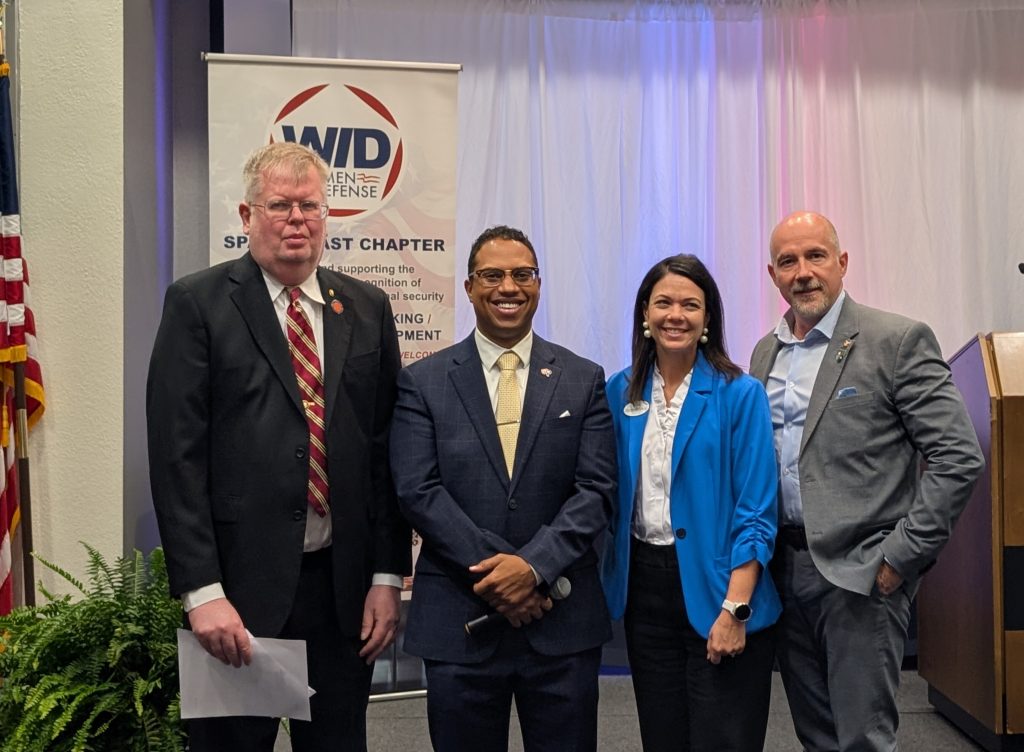
🎙️ Cordell Rolle Speaks at Space Coast Women In Defense Annual Awards Panel: CMMC, AI, and How to Stay Smart and Secure

At the Women In Defense Space Coast (WIDSC) Annual Awards Event, Rolle IT’s CEO Cordell Rolle joined an expert panel of cybersecurity and compliance leaders to unpack the evolving challenges of CMMC (Cybersecurity Maturity Model Certification) and Artificial Intelligence (AI). The panel brought together perspectives from across the industry and was expertly moderated by David Bragg from the University of Florida.

Cordell spoke alongside:

  • Reagan Edens, Chief Technologist and Founder at DTC Global
  • Elizabeth Huy, VP of Business Operations at Alluvionic
  • David Bragg, Moderator and Cybersecurity Programs Director, University of Florida

Together, they tackled some of the most urgent and nuanced topics facing the defense industrial base and government contractors today.


🔐 CMMC: Building a Culture of Compliance, Not Just Checking Boxes

The panel opened by reinforcing the mission behind CMMC:

“CMMC isn’t a hurdle — it’s a shield. It’s how we protect our nation’s supply chain, intellectual property, and the future of our industrial base.”

The panel addressed real-world concerns many small and mid-sized contractors face:

  • Confusion around what level of CMMC is required for subcontractors
  • Cost implications of CMMC Compliance and Assessments- which should have already been factored into contract prices
  • Companies looking to “just get compliant” without understanding the risk landscape

Cordell emphasized education and empowerment, not fear-mongering:

“We can’t just talk about compliance as a cost. It’s a capability. It tells our partners we’re ready, responsible, and reliable.”


🤖 AI & Compliance: Smart Technology Needs Smarter Boundaries

The conversation then shifted to Artificial Intelligence — one of the most anticipated and complicated topics of the evening.

Cordell discussed how AI can be a powerful force multiplier in cybersecurity, automating detection, correlation, and even response in ways humans can’t match. But he also cautioned against blind adoption:

“You can’t use just any AI tool in a compliant environment. You need to know exactly where your data is going — and who owns it once it leaves your network.”

One key insight from Cordell: Using AI within your controlled environment — not as an external, public tool — may be the only way to remain compliant under frameworks like CMMC, NIST 800-171, and DFARS.

He challenged companies to ask:

  • Is the AI processing data locally or in the cloud?
  • Is the model trained on your proprietary information — and if so, how is it secured?
  • Can you control retention, deletion, and auditability?
  • Who has access to your prompts, responses, and metadata?
  • How are permissions set for access to information within your environment?

“AI isn’t the enemy — it’s your responsibility. If you can’t explain where your information is going, then you’re not compliant. And you’re definitely not secure.”


🧠 Key Takeaways from the Panel

This year’s WIDSC event brought together government leaders, defense tech innovators, women in STEM, and cybersecurity trailblazers. Cordell’s message was clear:

CMMC compliance is achievable — if you start early and build smart habits
AI should be internalized, audited, and tested before use in sensitive environments
Zero trust applies to software too — especially those with autonomous learning
Education is the strongest defense — and free, public guidance must continue


💬 The Bigger Picture: Rolle IT Leads With Purpose

Cordell Rolle’s panel appearance reflects a broader principle at Rolle IT: We don’t just offer cybersecurity solutions — we help shape the cybersecurity conversation.

From supporting small DIB contractors to contributing on non-sponsored expert panels, Rolle IT shows up where it counts — with practical advice, not a sales pitch.

To learn more about how we support compliant AI adoption, CMMC readiness, and cyber risk reduction, visit us at https://rolleit.com.

Not Just Talking CMMC — Leading Efforts Read More »

The CMMC Tsunami: How Ripples Became Waves—and Now a Storm Threatens the Defense Industrial Base

Rolle IT Cybersecurity, CMMC Experts, CMMC Consulting CAAS

Far offshore, deep under the ocean, a powerful shift occurs—an earthquake, a volcanic eruption, or a landslide.
At first, the surface looks almost calm.
There’s no immediate towering wall of water.
Just a subtle change: a slight pull of the tide, a few ripples moving outward.

But beneath the surface, an unstoppable force has been unleashed.
A massive surge of energy races silently across the water at hundreds of miles per hour. As it approaches land, the seafloor rises. The wave, once almost invisible, grows into a towering wall of water.

When a tsunami hits, it doesn’t just flood the coastline—it redraws it.
Entire towns are swept away.
Harbors are wiped clean.
The landscape is forever altered, and only the most prepared—or the highest ground—survives intact.

Tsunamis are not ordinary storms.
They are transformational forces.


Now, across the Defense Industrial Base (DIB), another tsunami is approaching—not made of water, but of regulation, enforcement, and cybersecurity evolution.
This tsunami is called CMMC (Cybersecurity Maturity Model Certification).

The warning signs have been there. The ripples started years ago.

The only question left is: Will you be ready when it hits?


🌱 The First Ripples: Early Warnings Ignored

Years ago, the Department of Defense (DoD) recognized a growing threat: foreign adversaries were targeting the U.S. through the supply chain. Sensitive defense information was bleeding out through small and mid-sized contractors who lacked robust cybersecurity.

In response, early guidance like NIST SP 800-171 and DFARS 7008 & 7012 requirements were issued. These policies were the first ripples—small movements in the water that signaled a shift in expectations. While many companies unknowingly drifted closer to this impending disaster, each DFARS 7008 and 7012 clause they signed legally obligated them to have already fully implemented NIST 800-171 standards. These contractual commitments weren’t mere bureaucratic formalities—they were early tremors, subtle but undeniable confirmations of the seismic event beneath the surface. Those early ripples, largely ignored or misunderstood, were legal liabilities accumulating beneath calm waters, now coalescing into the regulatory tsunami known as CMMC.

But many companies treated these requirements as minor disturbances. Some completed a checklist. Some promised improvements without making real changes, some attested to NIST 800-171 compliance without knowing a thing about it. And others simply ignored the warnings altogether, anchored by the belief that bigger threats only happen to bigger ships.

The ripples were there. But few adjusted their course. 


🌊 The Rising Waves: CMMC Begins to Form

As data breaches multiplied and cyberattacks grew more sophisticated, the ripples grew into undeniable waves.
The Department of Defense realized more dramatic action was needed to protect national security.

Thus, the Cybersecurity Maturity Model Certification (CMMC) was born.

No longer would companies self-attest to their cybersecurity practices.
Third-party assessments would now be required to prove compliance.
Without certification, companies would be barred from executing on defense contracts.

The water was no longer gently stirring. It was rising.

And those waves carried with them a heavy message: Adapt or be cast adrift.


💥 The Earthquake Beneath: A Tectonic Shift in the DIB

Many companies didn’t notice it—but while they worked through proposals and deliveries, a massive earthquake rumbled far beneath the surface.

  • Threat actors were becoming state-sponsored and far more sophisticated.
  • Legislative pressure was mounting on the DoD to shore up its vulnerabilities.
  • Public trust in the resilience of the U.S. defense supply chain was beginning to erode.

This earthquake is what triggered the tsunami—the seismic force of CMMC requirements reshaping the entire defense contracting landscape.

By the time the first wall of water appears on the horizon, it’s already too late for last-minute scrambling. The energy unleashed cannot be stopped—it can only be anticipated and prepared for.


🌊🌊🌊 The Tsunami Approaches: What Happens Next?

The full enforcement of CMMC is not a distant possibility—it is an inevitable, crashing wave speeding toward the DIB.

Companies that fail to adapt will face existential consequences:

  • Loss of Contracting Opportunities: Without certification, companies will be disqualified from defense projects.
  • Reputational Damage: A company caught unprepared signals unreliability not just to the DoD, but to prime contractors and teammates.
  • ⚖️ Whistleblowers, False Claims Act, and Cybersecurity Noncompliance
    • False cybersecurity certifications are no longer a hidden risk. They are ticking time bombs.” – U.S. Department of Justice
    • Under the False Claims Act (FCA), companies that submit false information to the government—or falsely certify compliance with federal regulations—can be sued for massive damages.
      And cybersecurity compliance is now a major target.
    • In fact, the Department of Justice launched the Civil Cyber-Fraud Initiative in 2021, focusing specifically on holding contractors accountable when they:
      • Knowingly misrepresent their cybersecurity practices,
      • Fail to report breaches,
      • Or falsely claim they meet contract requirements like DFARS or CMMC preconditions.
    • 🔹 Example: In 2022, Aerojet Rocketdyne settled for $9 million after a whistleblower (their former cybersecurity executive) alleged that the company failed to comply with DFARS cybersecurity clauses—even though they were required to under federal contract terms (DOJ announcement).
    • 🔹 Key point: Individual employees—not just agencies—can trigger these lawsuits.
      Under the FCA’s qui tam provisions, whistleblowers are entitled to a portion of any recovered settlement.
    • In the context of CMMC, if a company falsely claims readiness or compliance to win a defense contract, they could face millions of dollars in penalties—and public reputation damage that is even harder to repair.
  • Financial Loss: Losing access to defense contracts could cripple companies, especially small and mid-sized firms that depend on this business.

This isn’t just a compliance checkbox. It’s an industry-wide rearrangement—a reshaping of who stays and who goes.

The coastline will be forever altered.


🛡️ Preparing for the Tsunami: Riding the Wave, Not Fighting It

The good news?
You can survive.
You can thrive.

But only if you start moving now.

Preparation looks like:

  • Understanding your CUI
  • Understanding your current cybersecurity posture
  • Developing robust System Security Plans (SSPs) and Plans of Action and Milestones (POA&Ms).
  • Engaging early with experts who can guide your certification journey.
  • Building a cybersecurity-first culture within your organization—before it’s forced upon you.

The organizations that prepare now will not only survive the tsunami—they’ll be the new leaders in the reshaped Defense Industrial Base.

Those who treat CMMC as an opportunity, not a burden, will rise with the wave.

The CMMC Tsunami: How Ripples Became Waves—and Now a Storm Threatens the Defense Industrial Base Read More »

Rolle IT at VETS25

Rolle IT Cybersecurity will be on the ground at VETS25 in Orlando May 13–16, and we’re looking forward to connecting with you! 🎉 Find us at Booth 807 and discover how our expert IT services and cybersecurity solutions can help support your mission.

Whether you’re looking to strengthen your IT infrastructure, explore innovative cybersecurity strategies, achieve and maintain CMMC Compliance, or discuss partnership and teaming opportunities, we’re ready to connect and collaborate.

👉 Schedule time with our team to dive deeper into your IT needs
👉 Stop by Booth 807 to meet us, learn more, and see how Rolle IT can be a valuable asset to your success

We look forward to seeing you there and working together to build stronger, smarter solutions!

hashtag#VETS25 hashtag#Cybersecurity hashtag#ITServices hashtag#TeamingOpportunities hashtag#RolleIT hashtag#VeteranEntrepreneurs hashtag#CMMC hashtag#MSSP hashtag#MSP hashtag#DIB

Cordell Rolle Rolle IT at VETS25 MSSP

Rolle IT at VETS25 Read More »

Forging the Future: CMMC and AI

Cordell Rolle, CEO is speaking at the Women in Defense Space Coast Chapter June 3 Awards event as part of a panel of AI, CMMC, and IT experts.

AI CMMC Event Cordell Rolle

https://www.linkedin.com/posts/women-in-defense-space-coast-chapter_save-the-date-event-registration-is-now-activity-7323816917100621825-ygzO?utm_source=share&utm_medium=member_desktop&rcm=ACoAAAh-4HsBNOhkOpOzu4f6enC4U4oUKXJBbx4

#CMMC #AI #RolleIT #CordellRolle #spacecoast

Forging the Future: CMMC and AI Read More »